

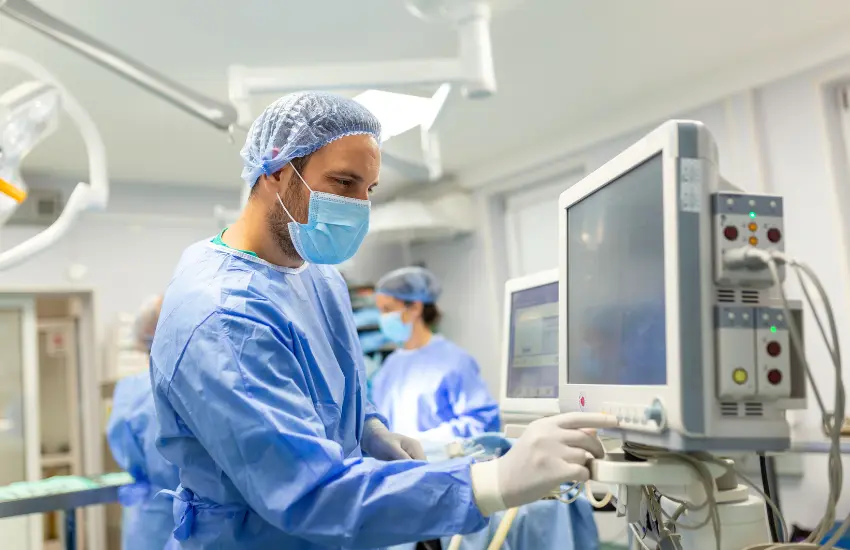
Most of us think of the operation when we think about surgery. But there is an invisible shield behind every operation. Anesthesia. It is necessary for the patient’s comfort and safety during a surgical procedure. People often don’t understand anesthesia and are afraid of it for no good reason. With that in mind, let’s look at the history, risks, precautions, and cutting-edge technology that make anesthesia even safer.
1. What Is Anesthesia?
Anesthesia is a medical intervention used to reduce pain in patients undergoing surgery or other procedures. It is done by numbing the body or putting the patient into a temporary sleep. At a specialized anesthesia hospital, doctors carefully choose the right type of anesthesia depending on the procedure and the nature of the surgery.
- Local anesthesia – Numbs a very small spot in the body.
- Regional anesthesia – It is larger in the area used for pain blocking. It is also known as spinal anesthesia.
- General anesthesia – The patient is in a deep sleep and is unconscious for the entire surgery.
2. A Brief History: Who Invented Anesthesia?
Dr. William T.G. Morton, a USA dentist, in 1846, first demonstrated the use of ether as an anesthetic. This marked the beginning of modern anesthesia. Prior to that, operations were done in extreme pain and trauma. His discovery shaped surgery as we know it and unlocked the ability to do complex operations painlessly and without inducing panic.
3. The Role of Anesthesia in Today’s Medicine
Anesthesia aids in:
- Carrying out surgical procedures with no pain to the patient
- Enabling surgeons to accomplish intricate and lengthy procedures
- Safeguarding the patient’s vitals and status during a procedure
- Alleviating the stress and trauma related to surgery
- Providing pain relief during childbirth and aiding in other diagnostic procedures
- Anesthesia made modern surgical care possible.
4. Anesthesia Myths
Anesthesia can be frightening because of the following misconceptions:
“You may never wake up.” → With current techniques, this is extremely rare.
“You can feel pain, but you can’t move.” → Newer techniques of monitoring anesthesia guarantee complete unconsciousness.
“It’s only for big surgeries.” → Even small procedures often require some degree of local anesthesia.
Anesthesiologists’ extensive training to foresee and handle issues that may arise with anesthesia and their overall system makes anesthesia safer.
5. Risks and Possible Complications
Anesthesia is usually safe, but there are some potential risks such as;
- Mild nausea, sore throat, and dizziness
- Allergic reaction
- Respiratory obstruction
- Hypotension/Hypertension
- Awareness during surgery
- Severe injuries due to anesthesia are rare but possible.
6. Precautions Before Anesthesia
To mitigate the risks, clinicians take the following measures;
- Conducting a pre-anesthesia evaluation.
- Setting fasting periods to avoid aspiration.
- Modifying accompanying disease medications.
- Describing the procedure to mitigate the patient’s anxiousness.
- A complete medical record is important to the anesthesiologist.
7. The Anesthesiologist
An anesthesiologist is not merely the person who “puts you to sleep” but;
- Conducts a pre-surgical assessment.
- Selects the anesthesia type.
- Continuously checks the surgery patient’s vital signs.
- Determines the effective pain relief and recovery methods.
- Provides emergency care.
- Their approach defines the patient’s safety during the procedure.
8. How Doctors Handle Risks Successfully
A lot of possible problems during surgery are prevented. In cases where a surgical patient’s blood pressure drops, a physician is able to relieve the immediate problem with medication. Anesthesiologists, surgeons, and nurses coordinate and cooperate to control surgical risks.
9. Modern Technology That Enhances Safety
Advances in technology have made anesthesia much safer:
- Pulse Oximeter – Continuously monitors the level of oxygen in the blood to catch issues early.
- Capnography – Checks the level of carbon dioxide to determine if breathing is adequate.
- Advanced anesthesia machines – Offer more advanced control over the delivery of anesthesia drugs.
- Computerized monitoring – Notifies the physician concerning any abrupt changes in the vital signs.
- Help the physician identify and treat problems that arise quickly. Reduce anesthesia risks.
10. Post-Operative Care & Recovery
Surgical patients are taken to the Post-Anesthesia Care Unit (PACU) as the first stage of recovery. Here:
- Nurses and Medical doctors monitor and record the patient’s breathing, heart rate, and conscious state, and the level of oxygen in the blood.
- Pain control medications are given.
- Nausea and other medication side effects are managed.
- PACU patients are discharged only when they are awake and medically stable.
- Home care after surgery consists of:
- Following the prescribed medication and diet plan.
- Not driving or doing anything strenuous for at least 24 hours.
- Watch out for any concerning symptoms, such as trouble breathing, bleeding, or a fever.
- Keeping any follow-up appointments.
11. Final Thoughts
Anesthesia as we know it today is a far cry from what it used to be. Thanks to the dedication of anesthesiologists, rigorous safety standards, and new innovations, the risks have become minimal while the benefits remain monumental. The focus should be on effective communication, trusting the physician to execute the plan, and adhering to the instructions. At the best hospital, expert anesthesiologists ensure patient safety and comfort, making every procedure smooth and pain-free.
There is no need to fear anesthesia. It should be respected and understood, as it plays a vital, life-saving role in almost all surgeries.