

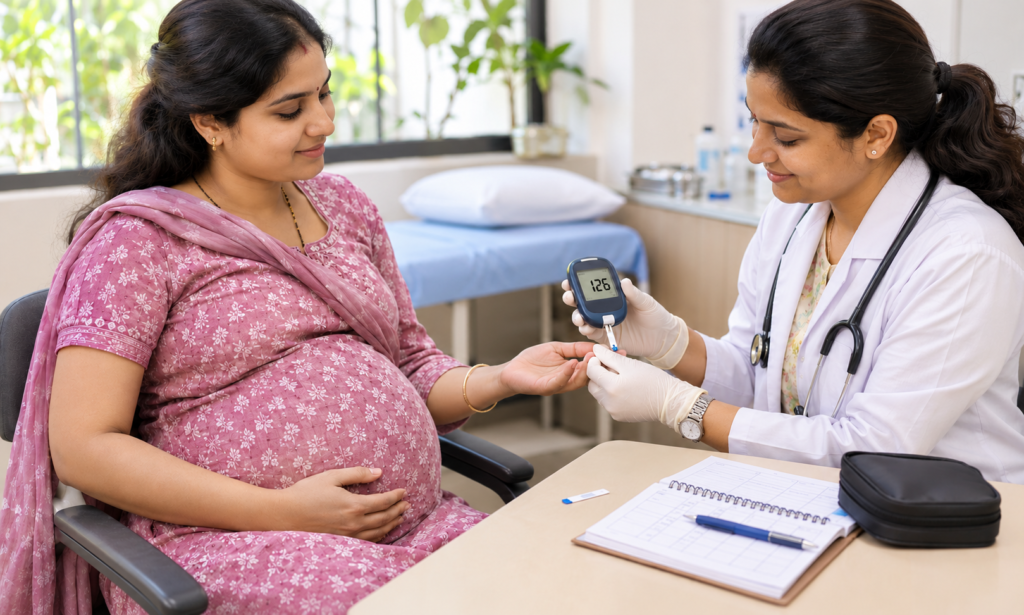
World Diabetes Day falls on 14 November, a reminder that gestational diabetes often goes unnoticed without a routine blood sugar test.
Gestational diabetes is high blood sugar that appears during pregnancy. Lots of women have it and never find out, and most still have healthy babies, especially when it’s caught early. The trouble is that it doesn’t usually send up a flare. That’s why screening matters.
What is gestational diabetes?
Pregnancy changes how your body handles sugar. The placenta makes hormones that help your baby grow, but those hormones also make you less responsive to insulin. Insulin is what moves sugar out of your blood and into your cells. Normally, your pancreas just makes a bit more to compensate. When it can’t keep up, your blood sugar goes up, and that’s gestational diabetes. It usually shows up in the second or third trimester and tends to clear after delivery. It does raise your chances of type 2 diabetes later, though. For the bigger picture, our Diabetology department explains how diabetes is diagnosed and managed.
Who is at higher risk?
Any pregnant woman can develop it. Some people are simply more likely to, including women who:
- Are over 35
- Were carrying extra weight before pregnancy
- Have a parent or sibling with type 2 diabetes
- Had gestational diabetes in an earlier pregnancy
- Have polycystic ovary syndrome (PCOS)
- Previously gave birth to a baby over 4 kg, or had an unexplained stillbirth
If any of these apply to you, it doesn’t mean it will happen. It’s just a good reason to bring it up with your doctor early.
Symptoms to watch for
Many women feel completely fine. When symptoms do appear, they might include being unusually thirsty, needing the toilet more often, feeling more tired than you’d expect, or noticing blurred vision. Urinary or vaginal infections that keep coming back can be another sign. These can easily be mistaken for normal pregnancy discomfort, so a blood test is the only real way to know. Don’t skip testing just because you feel okay.
The glucose test
Most women are offered a glucose screening test between 24 and 28 weeks. If you’re at higher risk, your doctor may bring it forward. There are two common versions:
- Glucose challenge test: You drink a sweet solution, and your blood sugar is checked an hour later.
- Oral glucose tolerance test (OGTT): Your fasting blood sugar is taken, you drink a glucose solution, and your levels are checked again over the next two to three hours.
A high result doesn’t confirm gestational diabetes on its own. Your doctor may ask for a second test before deciding. Our laboratory services include blood glucose testing as part of routine care.
Why blood sugar control matters
If your blood sugar stays high through pregnancy, it can contribute to high blood pressure, a bigger-than-average baby, a harder delivery, low blood sugar in your newborn, or early birth. Keeping your levels in the target range helps prevent these problems. It also lowers the chance of developing type 2 diabetes in the years after birth. For reliable background reading, the World Health Organisation’s diabetes fact sheet is a good place to start.
Managing gestational diabetes
Treatment usually starts with everyday changes:
- Eat balanced meals. Fill most of your plate with vegetables, pulses, whole grains, lean protein and healthy fats. Spread your carbohydrates through the day rather than eating them in big portions, and go easy on sugary drinks, sweets and refined flour.
- Stay active. A daily walk, some prenatal yoga or a gentle swim can help your body use insulin better, as long as your doctor is happy with it.
- Check your blood sugar. You may be asked to test at home, usually before and after meals, and to bring the readings to your appointments.
- Use medicine if needed. If lifestyle changes aren’t enough, your doctor might suggest insulin or another medicine that’s considered safe in pregnancy. Please don’t stop or adjust anything on your own.
- Keep up with scans and check-ups. Regular ultrasounds let your care team keep an eye on your baby’s growth.
You don’t need to cut out carbs or eat very little. Your baby still needs proper fuel. Try not to skip meals, and if you’re going a long stretch without eating, have a small snack with some protein or fibre. Our patient care services can help you find support through your pregnancy.
When to seek urgent care
Contact your doctor or go to the hospital straight away if you have a severe headache, blurred vision, swelling in your face or hands, sudden weight gain, abdominal pain, vaginal bleeding, a noticeable drop in your baby’s movements, vomiting that won’t stop, confusion, a fever, or blood sugar readings that stay very high or very low.
Frequently asked questions
Can gestational diabetes be cured?
It usually goes away after delivery, but your blood sugar should be rechecked about six to twelve weeks after birth. After that, regular screening for type 2 diabetes is important.
Will my baby be affected?
With good blood sugar control, most babies are born healthy. Scans will track your baby’s growth, and their blood sugar will be checked after birth.
Can I still have a normal delivery?
In many cases, yes. Your obstetrician will advise on the safest option based on your baby’s size, your blood sugar control and your overall health.
Can I keep exercising?
Usually, yes, as long as your doctor agrees. Regular, gentle activity is one of the most effective ways to keep blood sugar steady.
Care at Malabar Hospitals
Malabar Hospitals began in 1982, founded by Dr V N Moni and the late Dr A Lalitha. From the start, the hospital’s aim has been to give every patient the best possible treatment, whatever their financial situation.
Our Obstetrics & Gynaecology department looks after antenatal care, screening and monitoring for expectant mothers. The team includes Prof Dr K Pushparani, Dr K O Radhamani, Dr Renuka Radhakrishnan, Dr Mili Moni, Dr. Sangeetha K.P, Dr. Ranjini K and Dr Sooraj S. You can meet all our doctors on the Our Doctors page.
Today the hospital offers inpatient, day-case and outpatient care, covering testing, diagnostic investigations and surgery, with specialist departments including burn treatment, plastic surgery, paediatrics and maternity services.
To book an appointment, use the booking page or visit our contact page.